
From the 2002 trip to the 2023 one
June 26 to July 13, 2023
JP and where it all began
“Updated in May 2026 with new information about the trip preparation.”
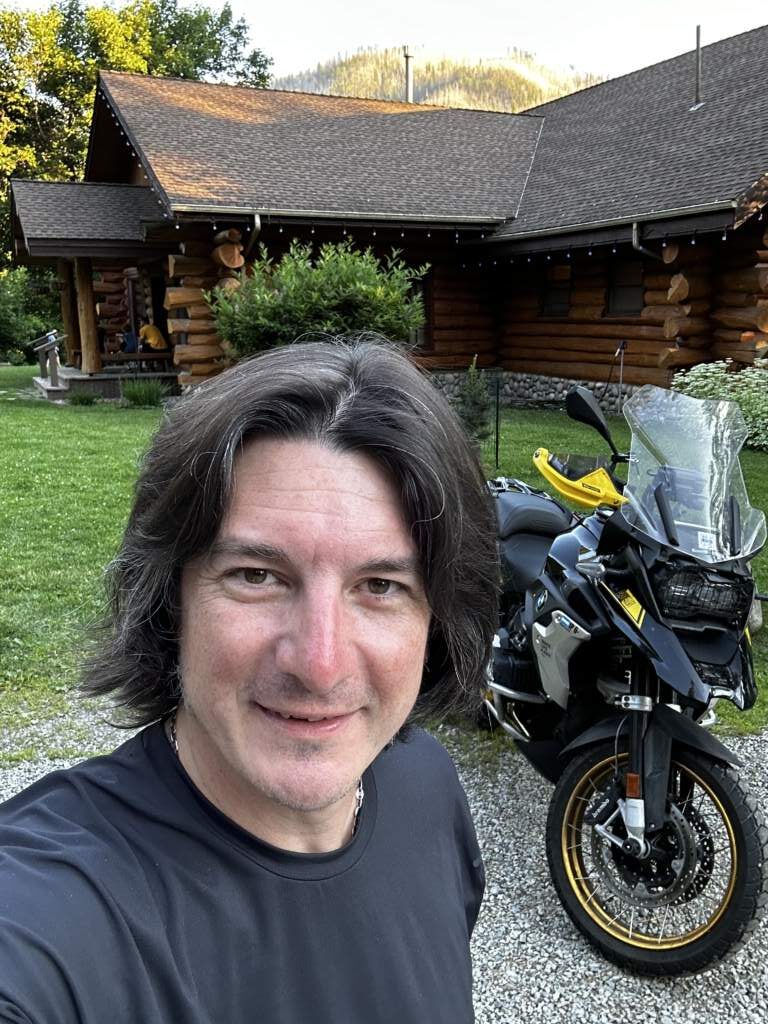
Before talking about routes, mountain passes and bison, we need to talk about JP.
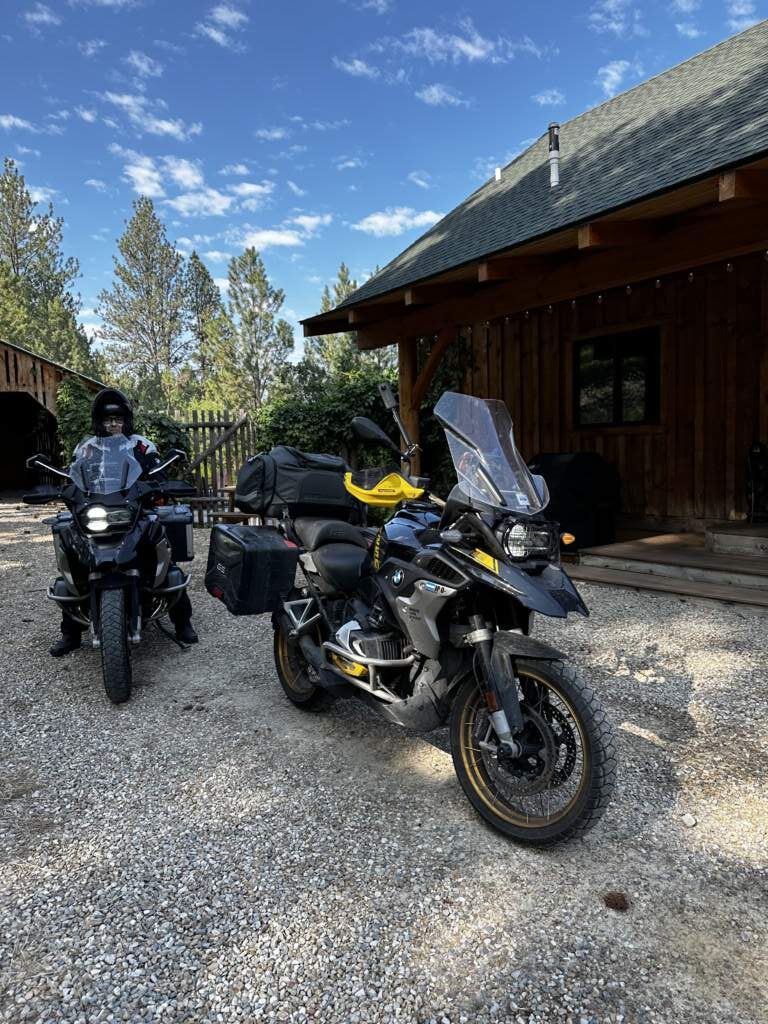
JP is the friend I took this trip with. Just the two of us. And on a trip of this scale, that changes everything.
Months before setting off, we talked and made the decision: we were going to do this trip no matter what. It wasn’t just a motorcycle trip. It was a way to strengthen a years-long friendship even further, to do something we’d both wanted to do for a long time. New dates, new route, and off we went.
The 2022 route that never happened
The first version of the trip, the one we’d planned for 2022, was long and demanding. About 500 kilometers a day, nine to ten hours of riding each day. Seattle, Walla Walla, the Nez Perce Indian Reservation, Lolo Pass, Missoula, Yellowstone. Four states in four days: Washington, Idaho, Montana and Wyoming.
It didn’t happen. But the idea stayed alive.
Leaving Seattle, we’d first head to Walla Walla; then pass through the Nez Perce Indian Reservation and Lolo Pass, spending the night in Missoula. From there, we’d ride to Yellowstone in a day, staying two days to explore the magnificent park. In short, we’d cover four American states in four days: Washington, Idaho, Montana and finally Wyoming.
From there our mouths started watering, and we decided we had to go to Yosemite National Park. Honestly, I don’t know where the idea came from, or who had it first — maybe it came out of some wild WhatsApp thread — but there I was, tracing the route like a man possessed. The plan was to come back along the Pacific coast, reaching Seattle a day before our flight home. A pretty crazy plan, yes, but we were determined to do it, even if it meant spending three days crossing the Nevada desert at who-knows-what temperature, on endless straight roads, since we had to go through either Nevada or Utah to reach Yosemite — one desert or the other.
The 2023 route
When planning the trip again for 2023, back in October 2022, I talked to JP and suggested a completely different route. The idea was the same up to Yellowstone, but then the plan was to head south to Grand Teton National Park, and then north to Glacier National Park on the Canadian border. After that, we’d come back along remote roads through Montana and Washington, hugging the Canadian border, passing through vast, colossal forests.
JP was on board without hesitation, and I got to work on it.
The dates changed because of JP’s daughter’s graduation, leaving right the next day; this was already at the end of June.
Here’s an approximation of the route, since Google Maps makes it tricky to plot more than 10 points, and some sections toward the end of the trip aren’t perfectly traced. But you’ll find them in the Excel file further below, with each one covered in its own separate blog post, which I’ll keep adding over the coming days. I don’t know a better way to do it!
The paper map and the roads closed by snow
To plan routes in Europe, I use Google Maps in one window and Via Michelin in another, which marks scenic routes in green. In the United States, Via Michelin isn’t as well set up.
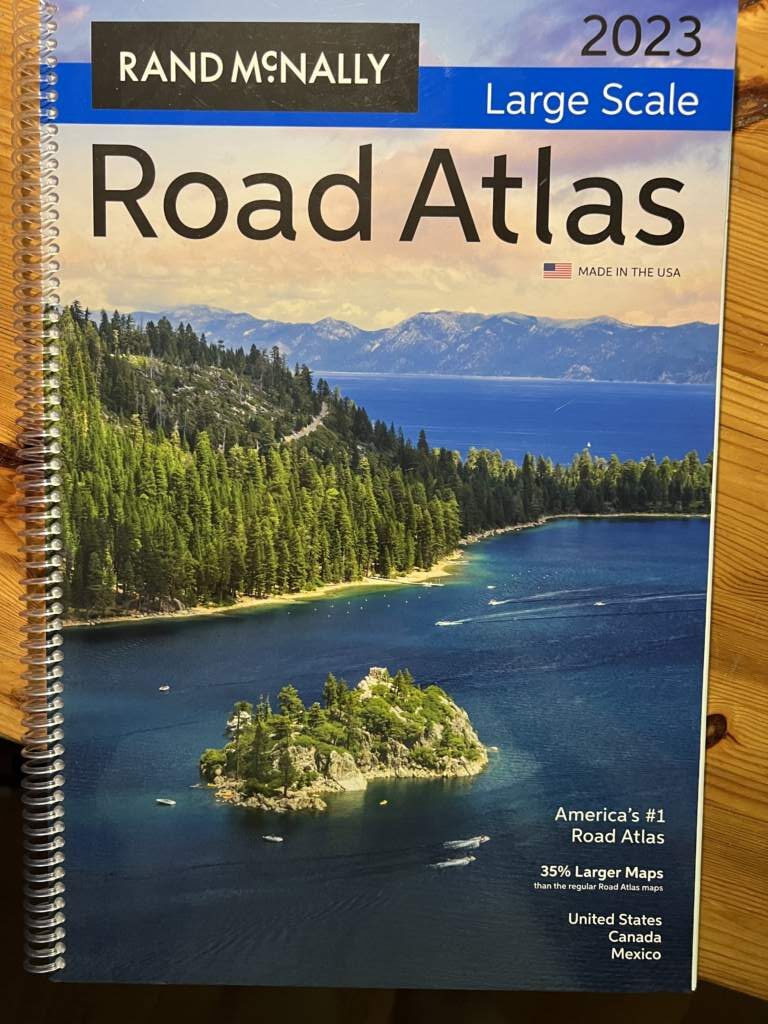
The problem was that I started planning in November, and Google Maps wouldn’t let me trace some stretches because they were closed due to snow.
Route 12 through the Nez Perce Reservation, with 99 miles of curves without a single straight stretch, and Lolo Pass. Beartooth Pass, from Yellowstone to Red Lodge crossing 3,300 meters. The Going-to-the-Sun Road in Glacier National Park. The route through Grand Teton. And Highway 20 in northern Washington, with the 52-kilometer Washington Pass.
All closed in winter. But reasonably open by late June. So I booked the hotels trusting in experience and common sense.
The hotels: the trickiest part
Being honest, the hotels at the national parks were a disappointment. In Yellowstone we stayed in Gardiner, just outside the park, to cut costs. The rooms were worn down by the years. Faucets that wouldn’t shut off properly, bedspreads that had clearly seen better days. And if you didn’t stay three nights, they wouldn’t clean your room — they probably knew the average stay was two nights. Best not to even mention breakfast. It’s the land of Cheddar cheese without any Cheddar.
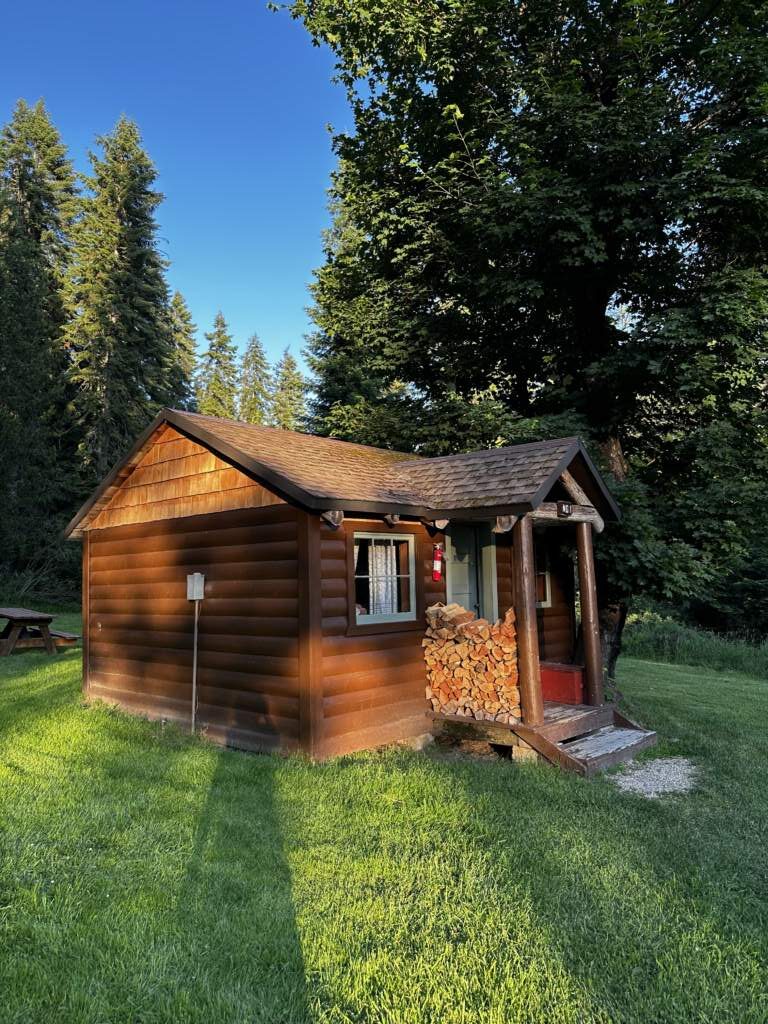
To book, I used a combination of Booking, Expedia and VRBO. Between the three of them, I got everything sorted. But after the pandemic the terms changed: you pay months in advance, and as the dates get closer you lose the option to cancel. In Europe you can negotiate with the owner. In the United States, especially for parks and cabins, it’s take it or leave it.
An important lesson: plan the routes first, then look for hotels. Not the other way around. The distance between stages shapes everything else.
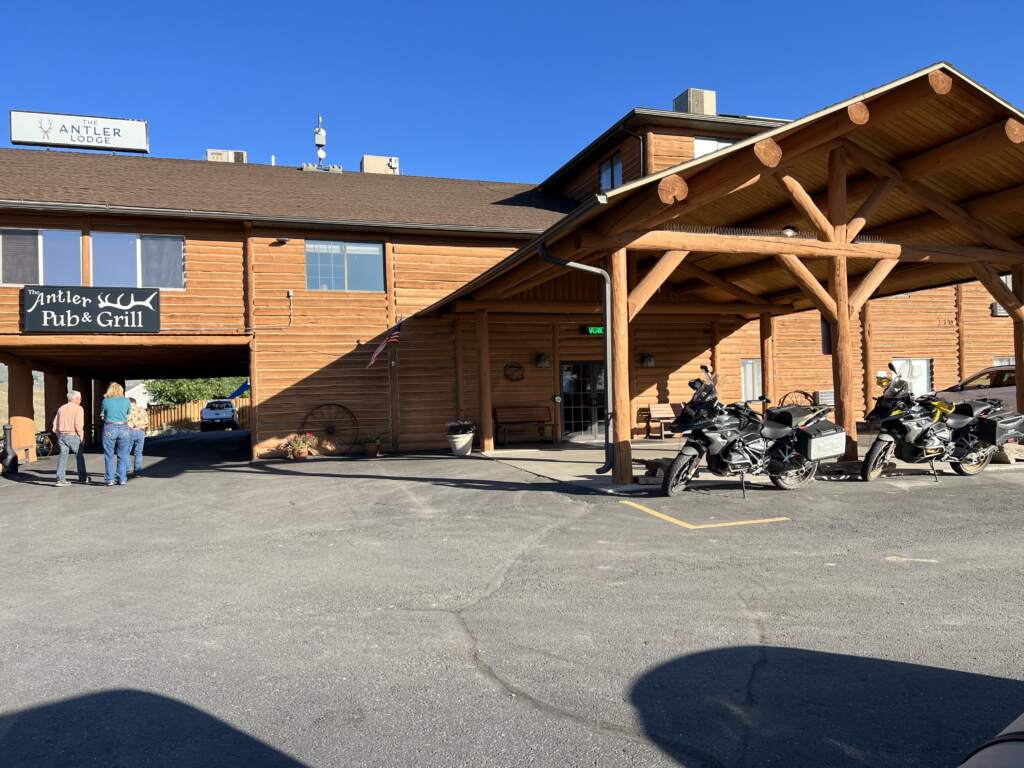
The other unknown when choosing hotels is the distance from the previous one and the route you’re planning to ride. A hotel might be excellent, but hours away from the previous one — or the opposite, a hotel that’s practically right next to it. Neither one works.
So the routes had to be planned first, not the hotels — that much was clear. That was the right order.
Do you actually read the reviews people leave before booking?
Honestly, yes — I’m in the habit of reading every review people leave on these sites, but as with other sites, most give four and a half stars out of five and leave short comments like “the front desk staff were very friendly,” “we were able to have dinner at the hotel with our reservation,” or “the hotel has parking.” That’s not very useful, if at all.
However, very few people mention the state of the bathrooms, what the breakfast is like, or the overall condition of the room. As we all know, photos rarely reflect reality, mostly because they’re shot with wide-angle lenses, and especially when the rooms were new when photographed; in short, you can’t really trust them. Square footage gives a good idea, but not everyone lists it. On top of that, you might get a different room than the one shown, and so on.
Even so, and even after reading everything people wrote, I still got the hotel choice wrong a few times. The best approach is still rebooking a hotel you already liked, or trusting a friend who stayed there before and enjoyed it.
The rules of the trip
With the routes more or less mapped out, JP and I agreed on some basic rules that we followed to the letter:
Leave by 8am at the latest, already had breakfast and the bike loaded. No more than six hours of riding. Two extra hours for stops — coffee, meals, gas, photos, videos. Reach the hotel by around 4 or 5pm at the latest. Eight hours total.
Looking back, those rules made the trip far more relaxed than it would have been otherwise.
The Excel sheet and phones instead of GPS
To organize everything I put together an Excel file with the day, the route in Google Maps, the kilometers, the estimated hours plus the two hours for stops, and all the hotel details. It always helps to have the hotel’s phone number handy when you’re in the middle of nowhere.
We decided to go without a physical GPS and use only our phones, mounted with a special holder JP had, protected from the rain. One of the best decisions of the trip.
Here’s an example of our file.
If you want to see it properly — all the routes on Google Maps, the kilometers, the riding hours, which state we were riding through, the hotel details, and so on, as you can see in the photo below — you’ll need to download it from the red link below.
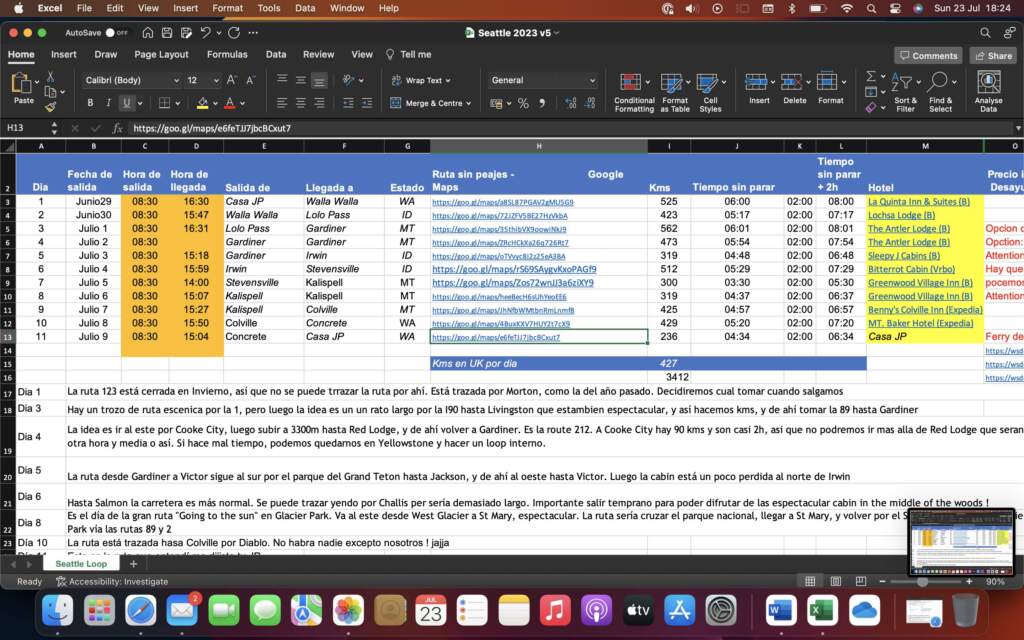
We plotted all the routes on Google Maps, which was new to me. In the end we decided to go without a GPS and use only our phones, mounted where the GPS would normally go with a special mount JP had, and therefore protected from the rain. This was one of JP’s great ideas!
I also used the Calimoto app, which I love and which offers more information than Google Maps — including the estimated arrival time at the final destination and altitude, two things Google Maps doesn’t easily give you. But its mount on the handlebar left it exposed to the rain, so we ended up using Google Maps with maps downloaded for offline use.
It worked perfectly.
And then, we set off.
📍 Resources and tools for planning your trip
🗺️ Calimoto — The best app for motorcycle routes. Altitude, arrival time, scenic routes. Essential.
📋 VRBO — For cabins and rural stays in the USA. Pairs well with Booking and Expedia.
🏕️ Gardiner, Montana — The most practical base for visiting Yellowstone. More reasonable prices than inside the park.
🛣️ Beartooth Highway — Plan ahead. Opens in June, closes in September.
☀️ Going-to-the-Sun Road — Reservation required. Slots sell out within minutes at 8:00 am.
🛣️ Highway 20, Washington — The great unknown of the American Northwest. Don’t miss it.
Route from Seattle to Yellowstone and Glacier Park
- 2022 USA, a dream trip … failed!
- USA, a dream trip 2, we did it!
- Seattle (WA) to Walla Walla (WA)
- Walla Walla (WA) to Lochsa Lodge (ID)
- Lochsa Lodge (ID) to Gardiner (MT)
- Yellowstone & Bear Tooth Pass (WY)
- Yellowstone (WY) to Idaho – Irwin (ID)
- Idaho via Salmon on the way to Missoula – Stevensville (ID)
- Idaho to Montana, to Glacier Park – Kalispell (MT)
- Going to the Sun – Glacier National Park (MT)
- Glacier Park (MT) to Colville (MT), riding along the Canadian border
- Highway 20 Along the Canadian Border, heading to Concrete (WA)