
From Zaragoza to Medjugorje: a ferry, Italian motorways, and 9 kilometers of pure Croatian misery
“Updated in May 2026 with new information about the trip preparation.”
Every motorcycle trip needs a why. This one was clear from the start: go to Medjugorje, in Bosnia, as a pilgrimage. A long trip, solo, with everything that involves — preparation, mindset, and plenty of hours under a helmet. Some parts of what I experienced there stay with me, and those are personal. But the rest — the roads, the ferries, the Italian and Croatian drivers, the hotels, the unexpected turns — that I’ll tell you all about.
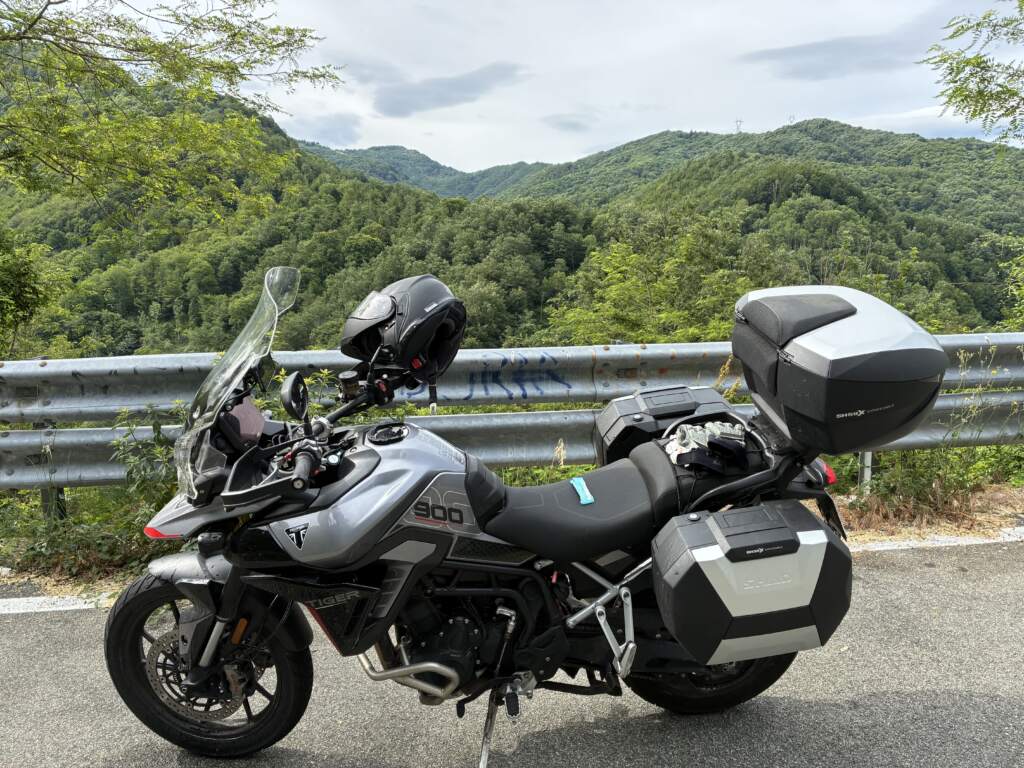
First I had to get Lola, my Triumph Tiger 900, ready. With 30,000 km already on the clock, it was time for a service at the Triumph dealership in Zaragoza. They told me it was the first 30K service they’d done on that model — the bike is a year and a half old. Everything checked out fine. New tires while I was at it.
The summer suit and the heat lesson
For gear, a BMW Rallye summer suit. The weather apps confirmed it: temperatures between 21 and 35 degrees for almost the entire trip. Only one day, back in the French Pyrenees, did it drop to 14 degrees and I put the rain jacket on.
One thing I learned — or relearned — is that it doesn’t matter how good your summer suit is: past 34 or 35 degrees, the heat on a motorcycle is unbearable. Everything vented, open, ready. Beyond that point, physics takes over.
The days before: training rides and flooded bridges
Thursday, June 12 — I rode from Valladolid to Zaragoza in the afternoon to test out the suit. Mistake. By nine at night it was 34 degrees on my street. I arrived fine, but learned that heading out in the afternoon in June has its consequences.
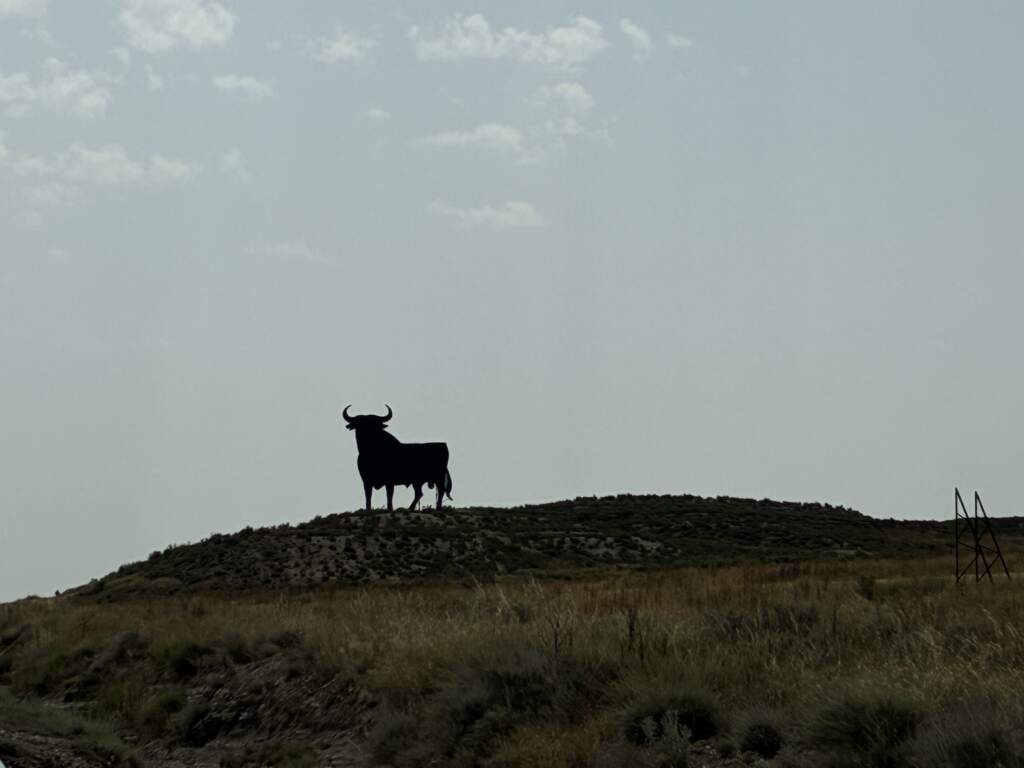
Saturday, June 14 — Training ride through Leciñena, Sariñena, and Bujaraloz to get the body used to eight or nine hours on the bike a day.
Here I learned something important: you need to stop every two hours at most. When you see a bar full of people and think “I’ll try the next one,” and then another, and another, you realize four hours later that everything hurts.
The previous night’s rain had done its damage: two roads closed in Azaila because the water had swept away a bridge and flooded the surrounding area. Locals were blocking traffic and redirecting where they could. I had to go around through Híjar and La Puebla de Híjar.
Back home, I looked at my luggage. I was carrying too much stuff.
Sunday 15 — Zaragoza to L’Hospitalet: Bar El Español and the most expensive hotel of the trip
300 km, five hours and forty minutes in reality. The road to Barcelona was great for me as far as Lérida — almost no cars, a real pleasure. Then the trucks appeared, the temperature climbed to 34 degrees, and riding became unpleasant. Motorway for the last 100 km.
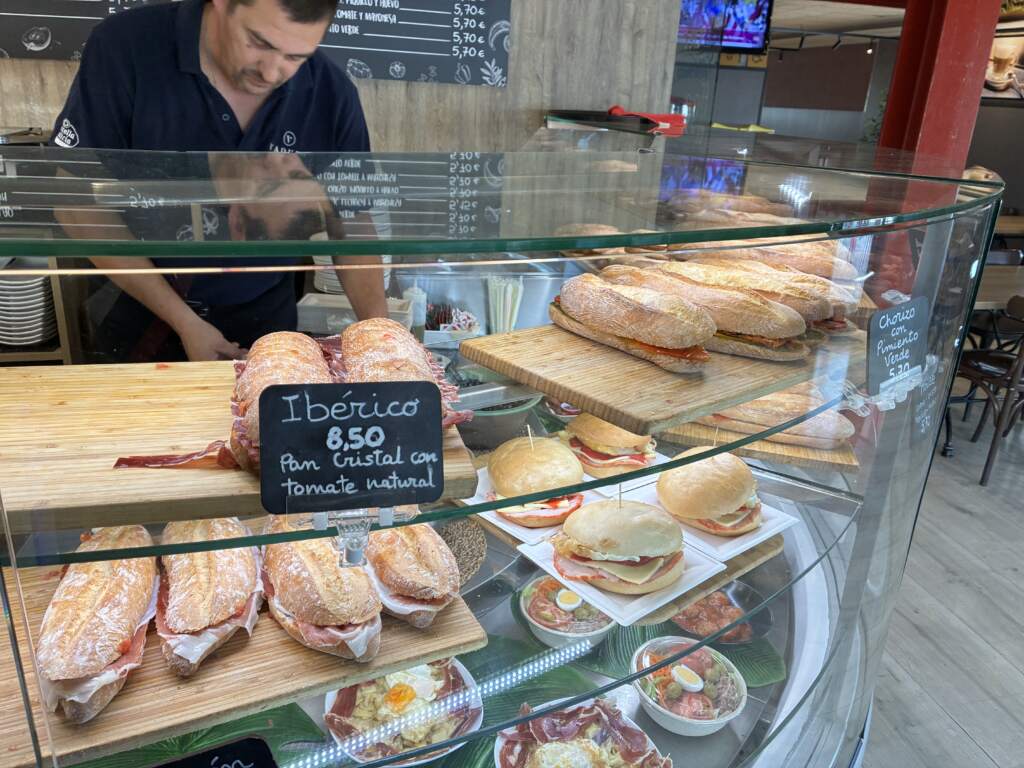
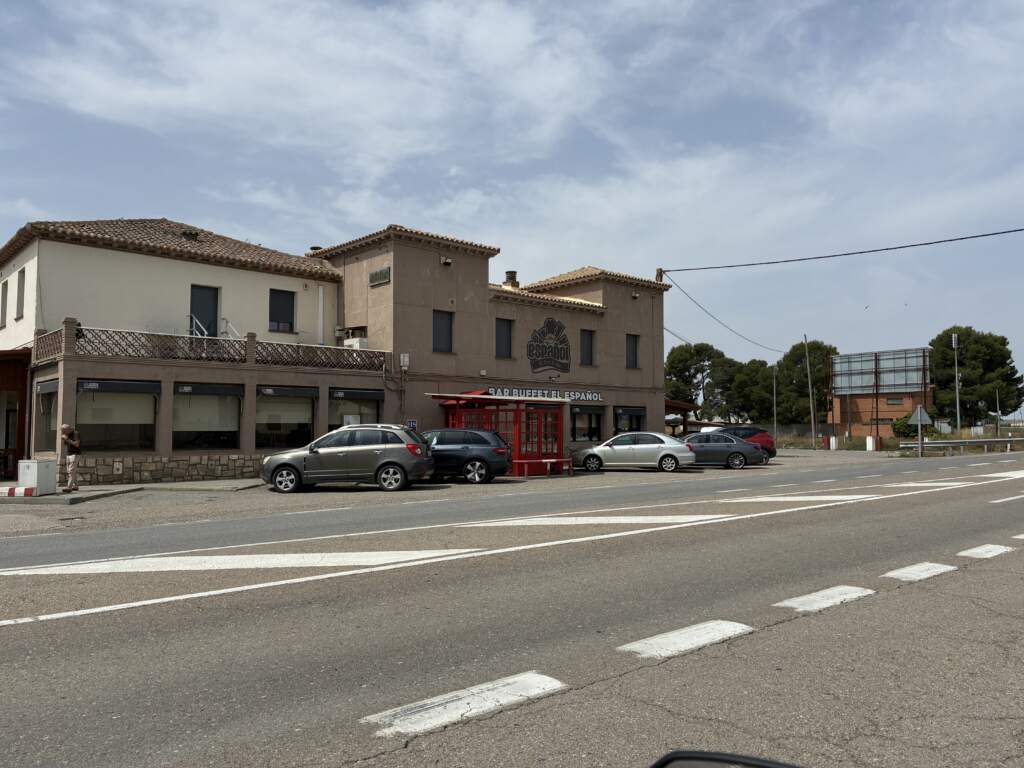
A mandatory stop in Bujaraloz: Bar El Español. What a find. Every kind of tapa, sandwiches, a pleasant terrace. One of those roadside places that are getting rarer and rarer, and that you truly appreciate when you find one. Worth going back to.
The hotel in L’Hospitalet was twelve minutes from the ferry check-in — Google Maps said 26, but at six forty-five in the morning it’s twelve. It was the most expensive of the trip, but it had enclosed parking for Lola, which was what mattered.
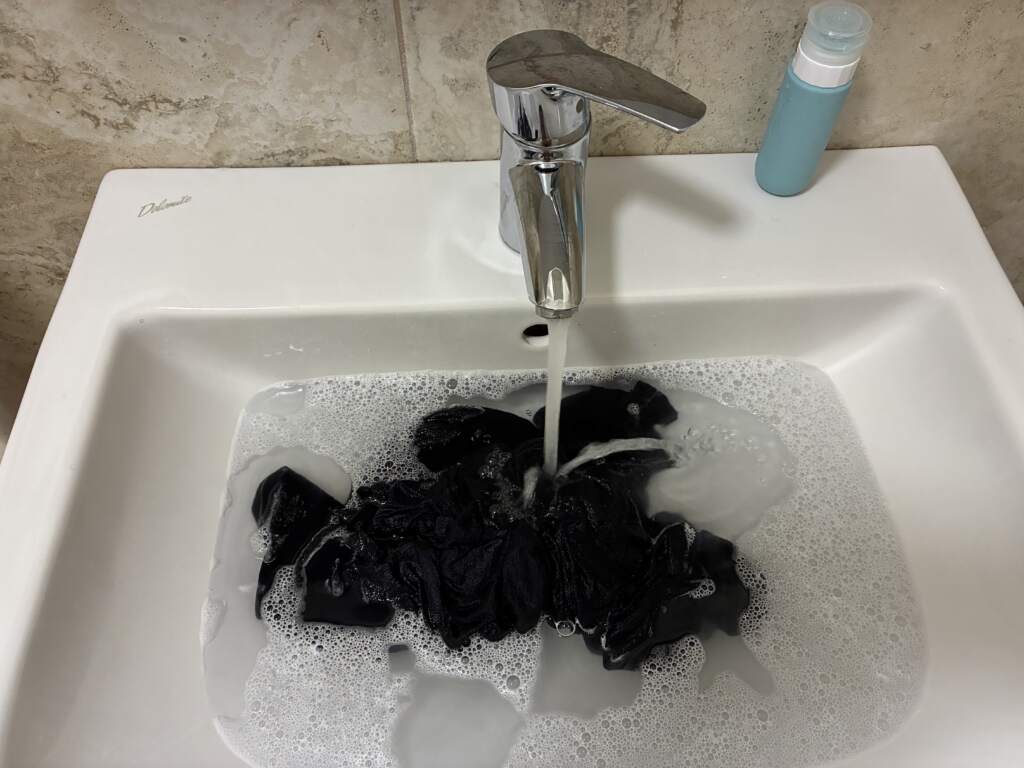
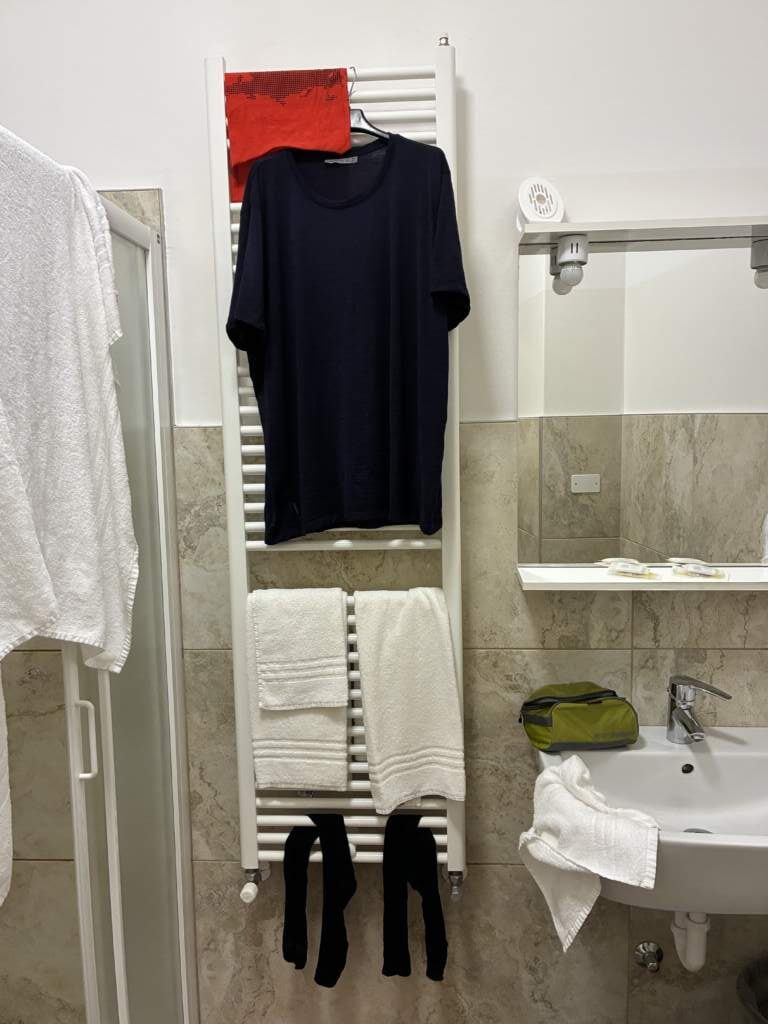
That night I also started using my friend Miguel’s laundry system: wash, wring out well, spread everything on top of a bath towel, roll it up like a burrito, wring again. The towel ends up soaked but the clothes are nearly dry. I only used two riding shirts the entire trip, out of the four I brought. The method is perfect.
Monday 16 — The ferry to Genoa: 23 hours, Arab passengers, Asian crew, and the forgotten cap
Check-in at seven in the morning. When I arrived there were already thirty or forty bikes ahead. More and more kept coming — every type, brand, nationality, and color. A real sight.
What I didn’t expect was the number of Arab passengers on board, easily recognizable by their clothing. Nor did I expect the entire crew to be Asian — Indonesian, Thai — on an Italian ship sailing out of Barcelona. The result was that Spaniards and Italians had to speak English to communicate with the crew. Curious, to say the least.
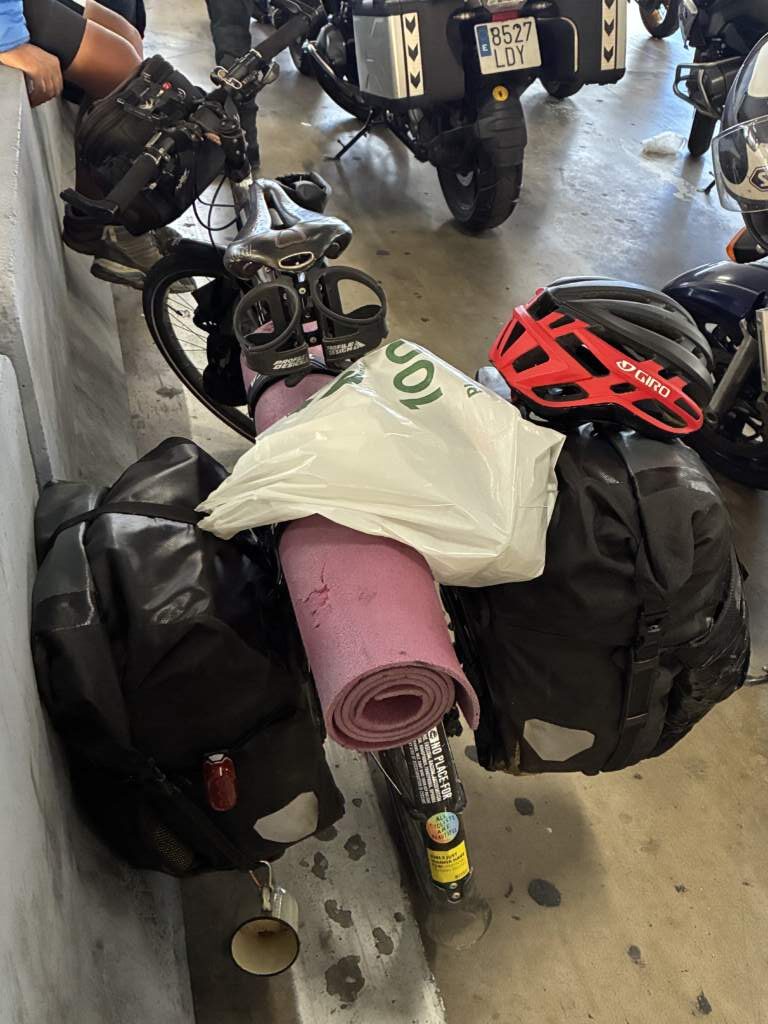
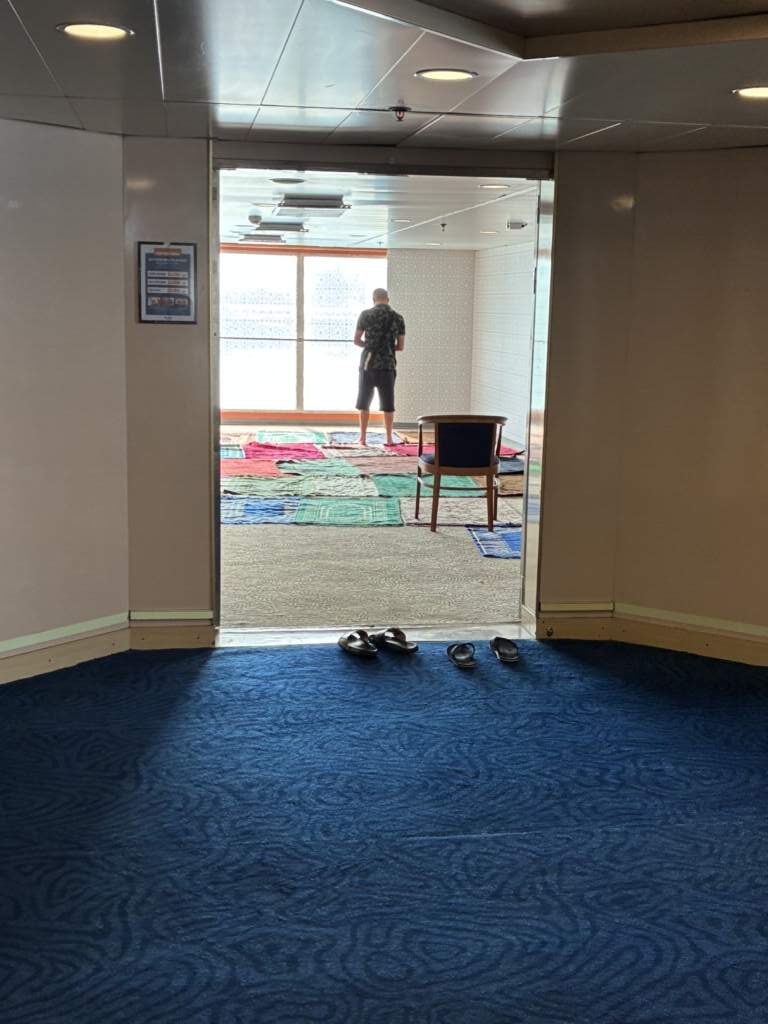
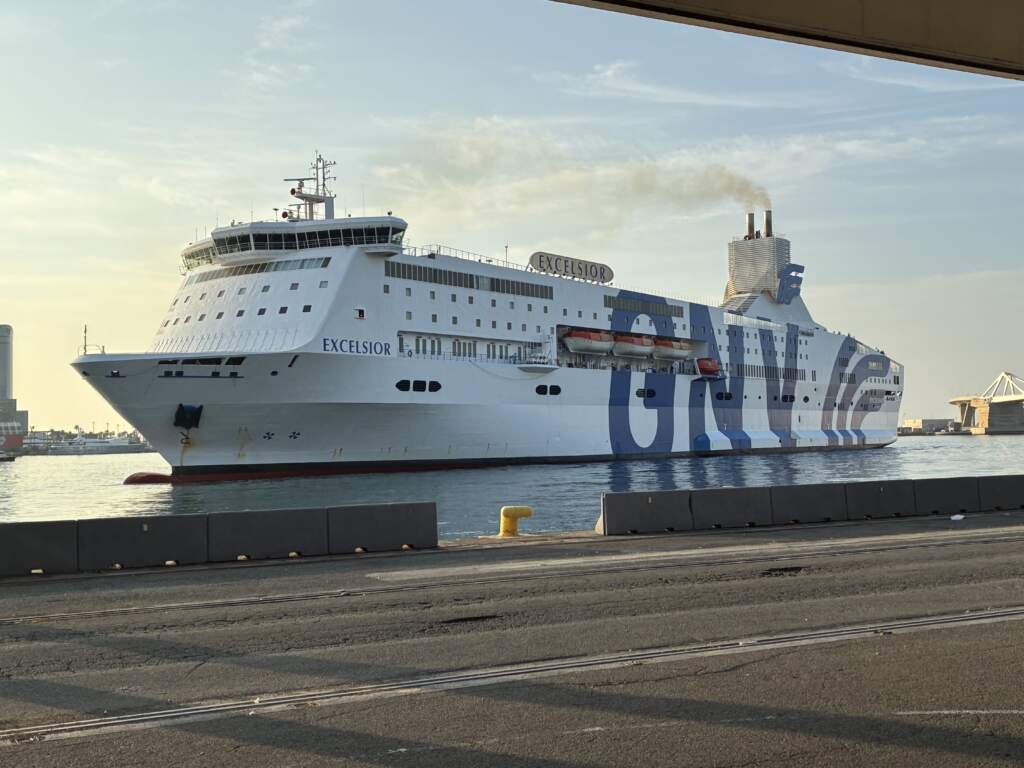
The crossing took 23 hours — maybe too many. I read, wrote, walked around the deck. That’s when I discovered I’d left my cap on the bike. How is that even possible?
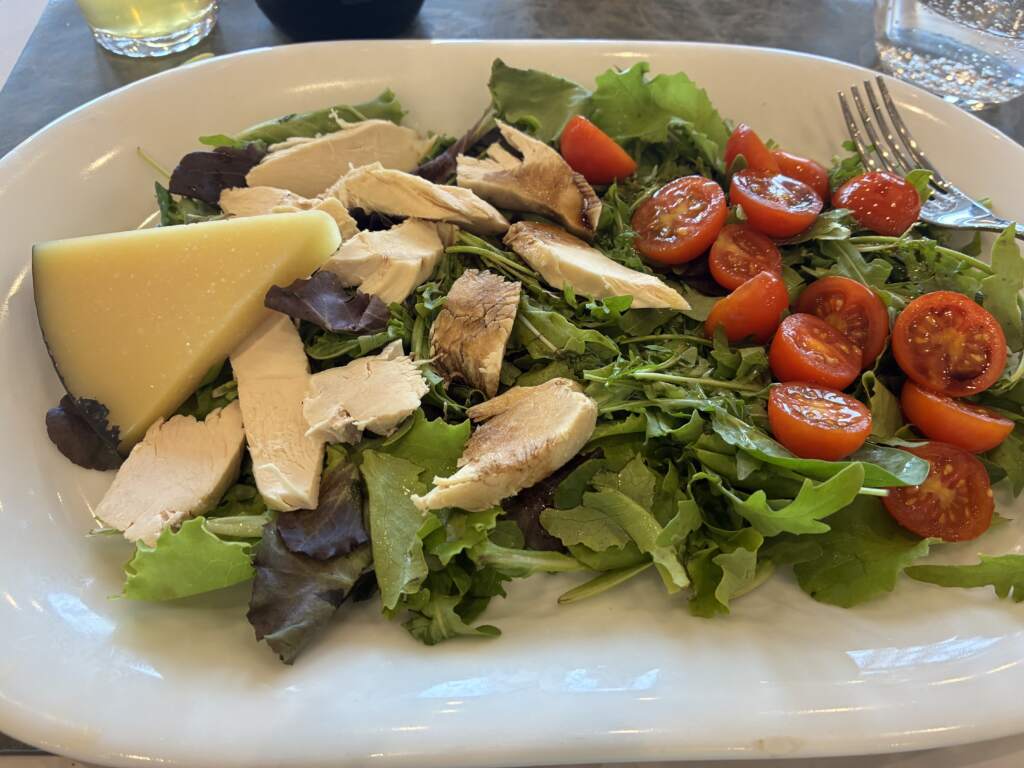
I didn’t eat on the ferry — I’d brought Corny bars for the trip. I had a chicken salad for dinner with low expectations, which were duly met. Wifi cost 9 euros and burned through at an impressive rate. Out at sea the gigabytes vanish like magic, but at least I could stay in touch with family and friends while reading the news
.
But the worst part came in the morning.
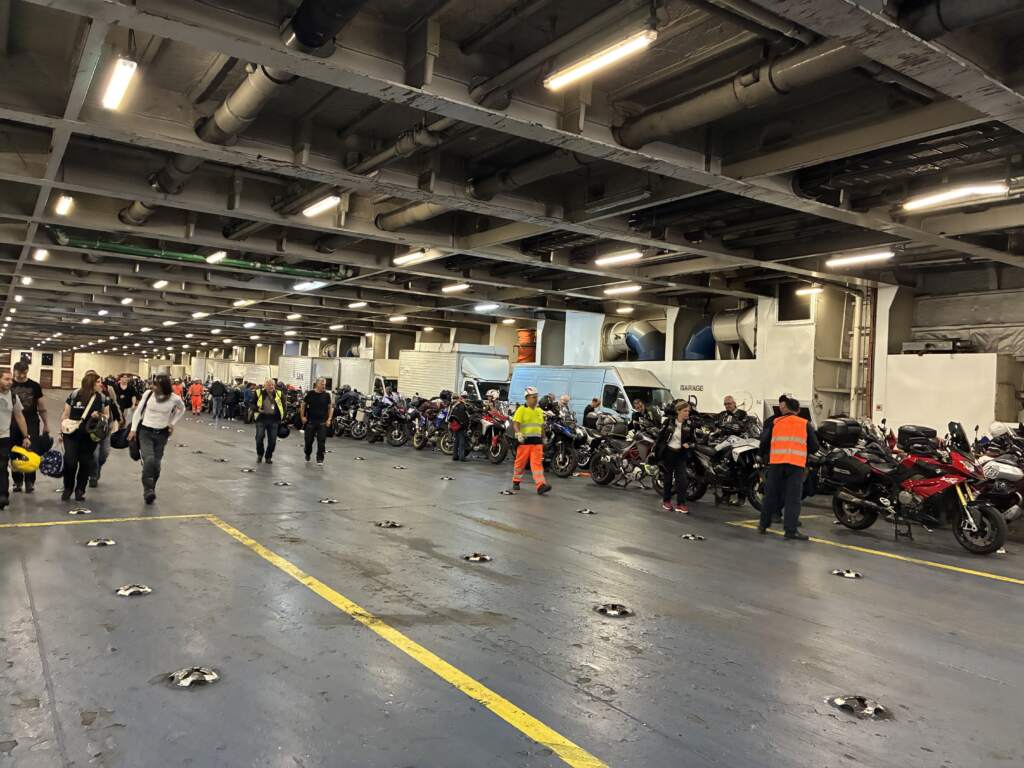
The ticket said arrival in Genoa at nine. We arrived at a quarter past seven. It was announced over the loudspeakers at ten at night — a surprise for many. We had to leave the cabins by six in the morning.
The riders — most of us on deck 7 — spent from six until seven forty-five sitting in the corridors waiting to be let down to our bikes. Nearly two hours standing, with the helmet, the bag, and everything on. Those who’d slept in the ship’s lounge chairs stayed there until five minutes before and came down calmly. Those of us who paid for a cabin suffered the corridor. Something about that system is broken.
Tuesday 17 — Genoa to Treviso: the beautiful route and the disastrous one
411 km, eight and a half hours in reality.
At customs in Genoa, the question was direct:
— Coming from Barcelona or Morocco?
— Barcelona.
— Go ahead. Next!
Everyone took the motorway toward Piacenza. I took the Strada Statale SS45 — 90 km from Genoa to Piacenza via Bobbio, which took me two hours and twenty minutes. Only one Spanish rider joined me, and we kept passing each other at every stop. The valleys were spectacular — I left through the less affluent part of Genoa, followed a river, and gradually entered a landscape I wasn’t expecting.
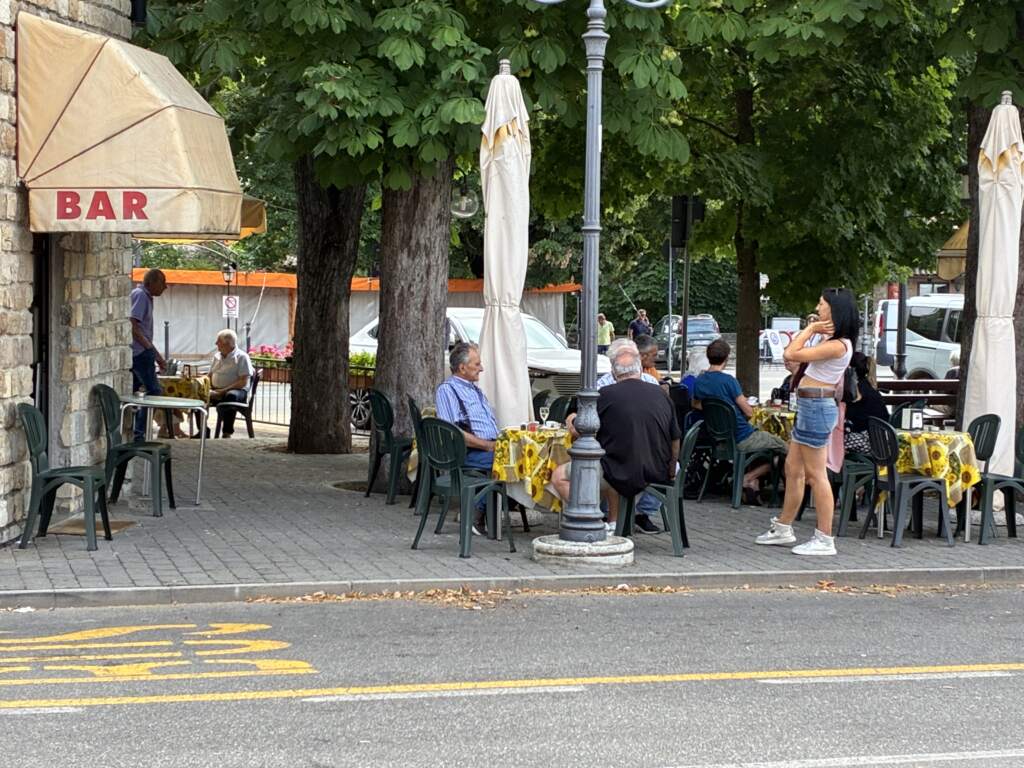
What came next was a mistake I won’t repeat. Since we’d arrived two hours early, I decided to go from Piacenza to Treviso by road. 230 km of cars, trucks, grand construction projects where nobody seemed to be working, speed limits of 50 or 70, and towns where one ended and the next began immediately.
It is what it is.
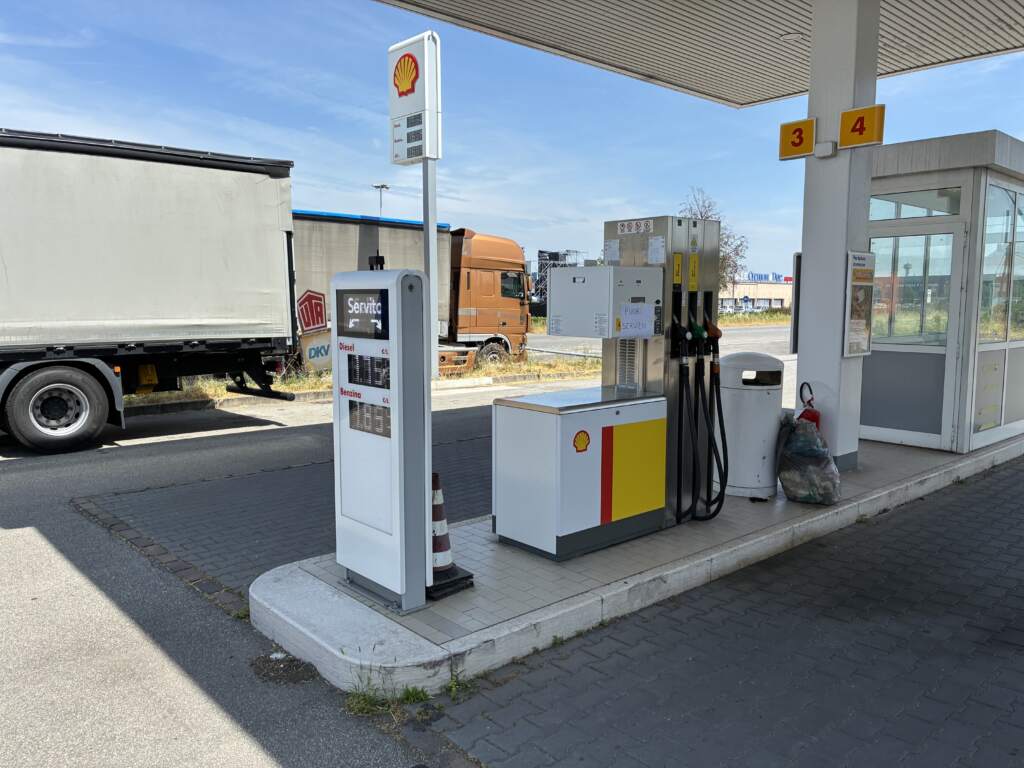
A note on Italian driving: about 7 or 10% of drivers ride right up behind you on a bike in a way that makes you afraid to brake. And merging onto the road from a side access without yielding — even when you clearly have the right of way — is a common practice. You get used to it, but it takes practice.
I loved Treviso. Small city, pedestrian center, gorgeous square, very Italian streets. And the best pizza I’ve had in years.
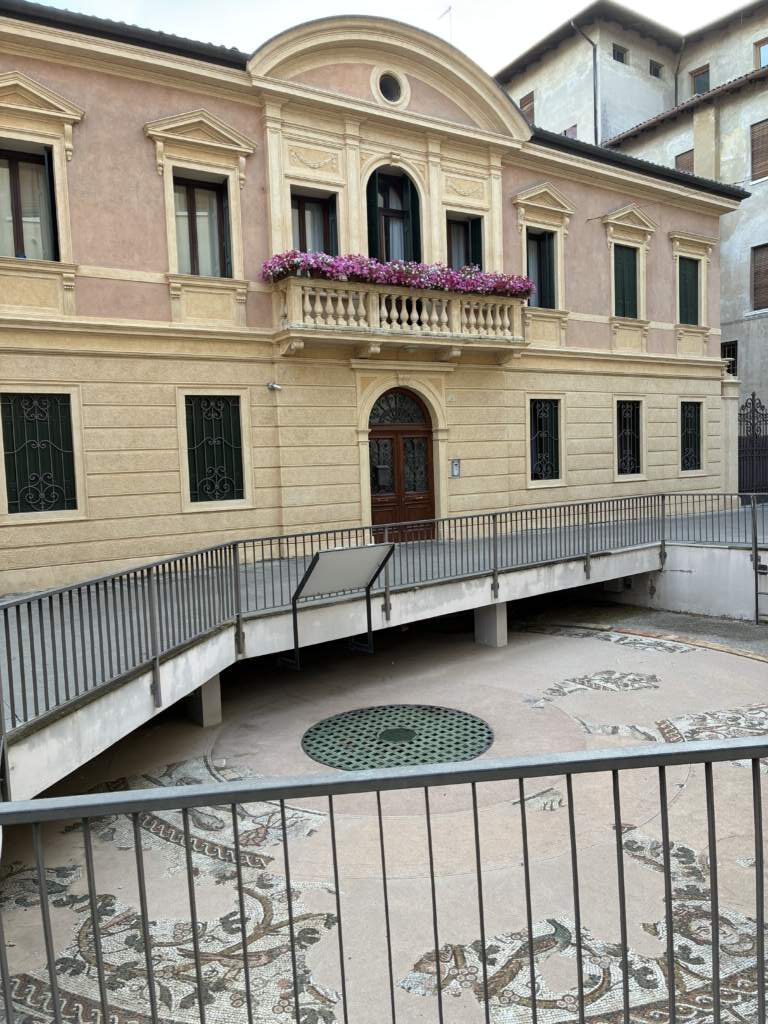
I was struck by the price of the pizza, just 9.9€; in Bosnia, for example, it cost 20€.
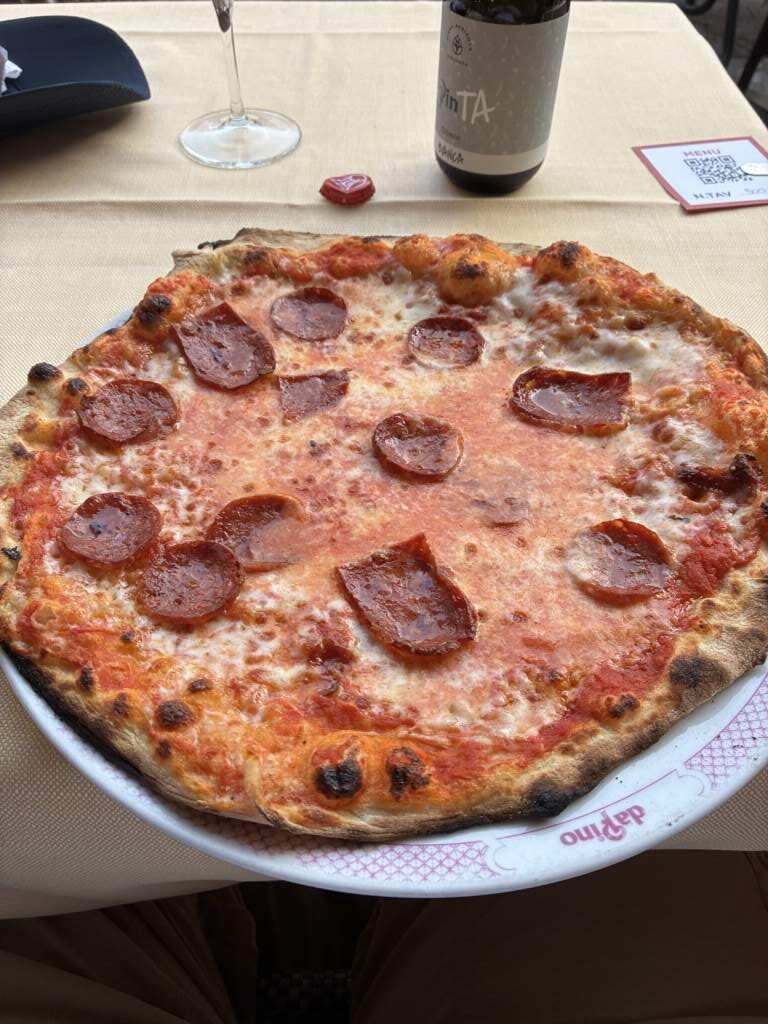
I slept at Centro de la Famiglia — a guest house where all proceeds go entirely to its foundation helping families in need. Clean room, spacious bathroom, perfect air conditioning. Simple but convenient breakfast for hitting the road. A great B&B in a beautiful city.
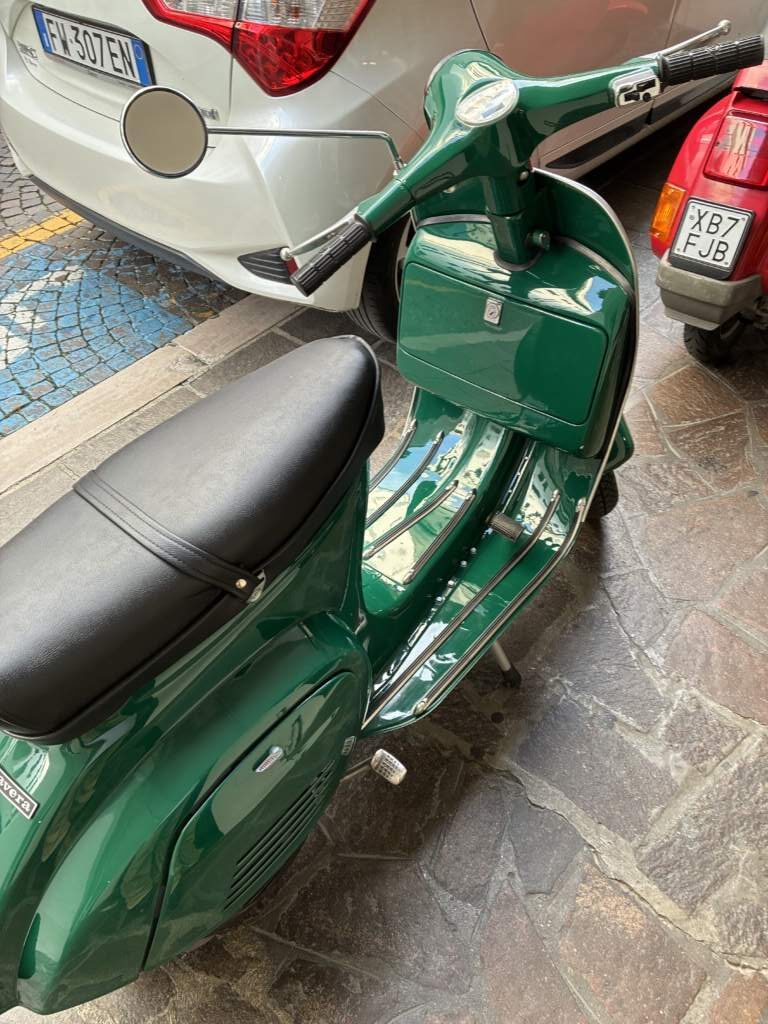
Wednesday 18 — Treviso to Sukosan: Slovenia, Croatia, and the octopus salad
442 km, nine hours in reality.
Motorway to Trieste — there’s nothing interesting for riding between Treviso and Trieste. From Trieste I crossed into Slovenia with no border checks, and the change was immediate: suddenly forests, curves, perfect asphalt, absolute peace. A biking delight that didn’t last long — Slovenia is small and you’re quickly in Croatia.
Croatia disappointed me a bit, honestly. The driving is worse than in Italy — quite a bit worse. On the motorway, cars passed me at 200 km/h like it was nothing. Turn signals seem like an optional accessory most people have decided not to bother with. And the solid line running the length of the road means everyone overtakes wherever they feel like it.
That said: I didn’t see a single accident in the whole country. Not one police officer either. They drive without rules among themselves, but they seem to understand each other.
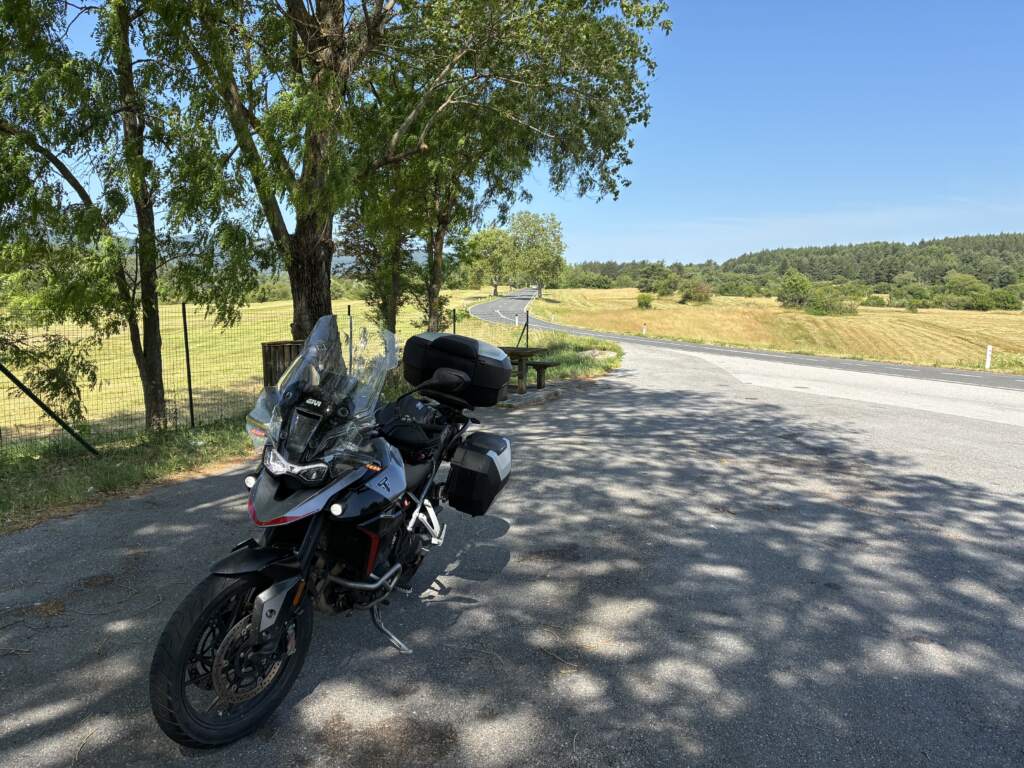
Roadside rest stops are back, with restrooms — quite a treat; and, silly as it sounds, with trees giving shade when you stop.
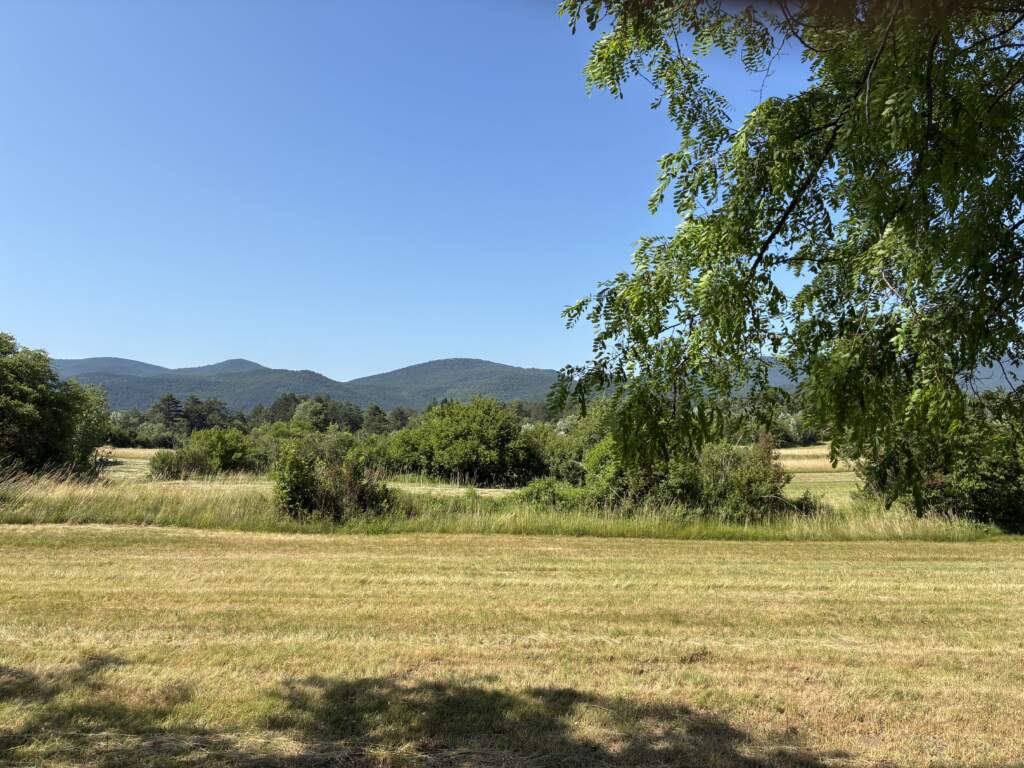
The coastline itself — aside from a few genuinely spectacular spots — wasn’t what I expected. On the left, a low, dry mountain range. On the right, sandy, bare islands. Once you pass Rijeka the traffic clears and the real enjoyment begins: just motorcycles, campervans, and local cars.
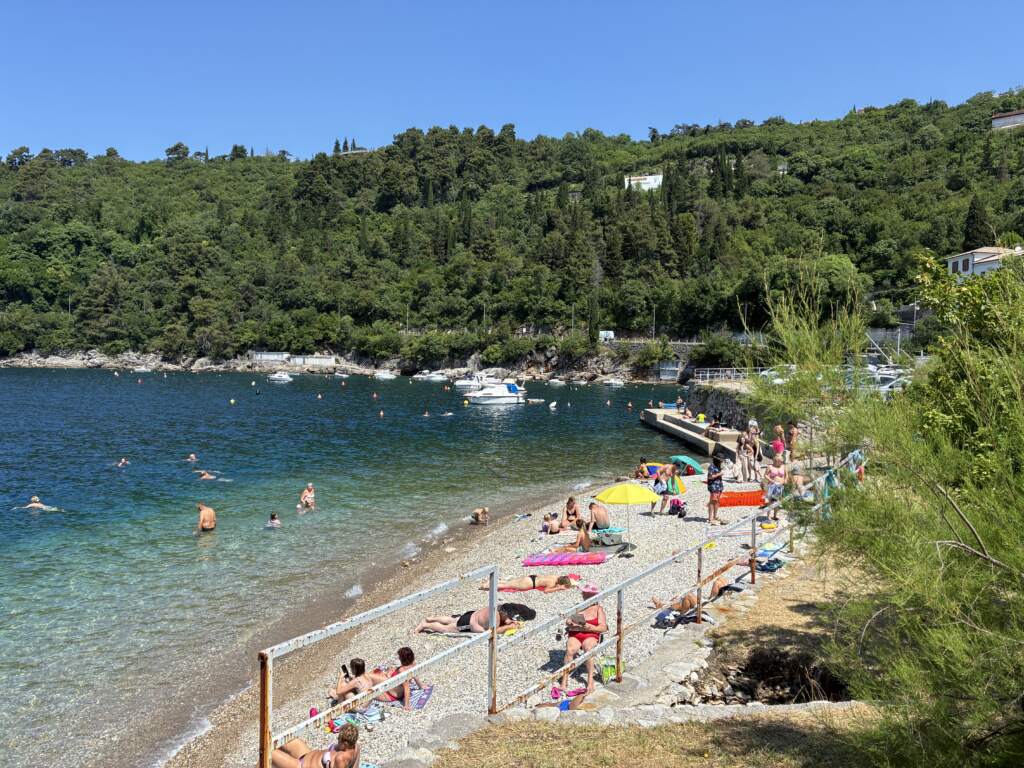
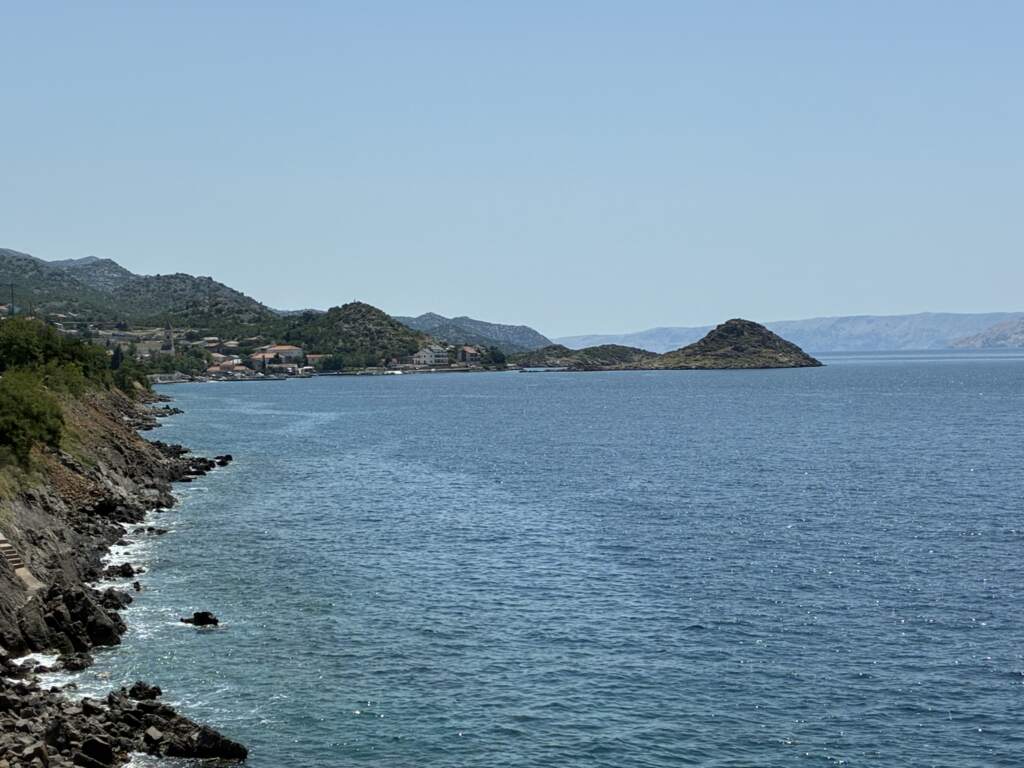
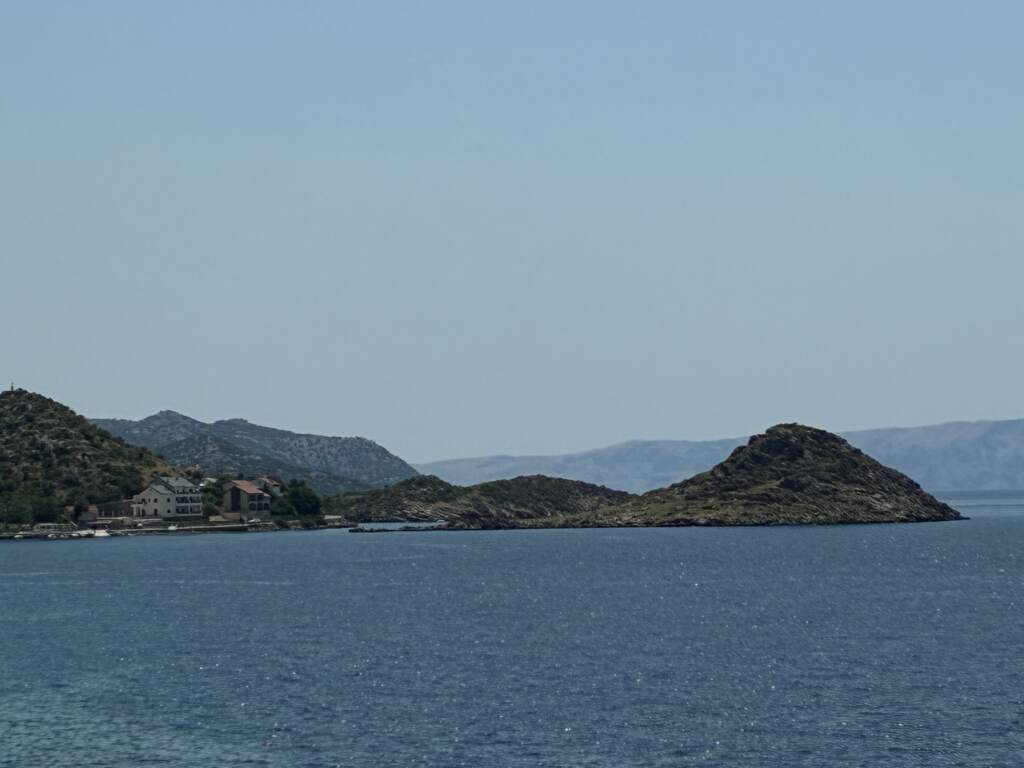
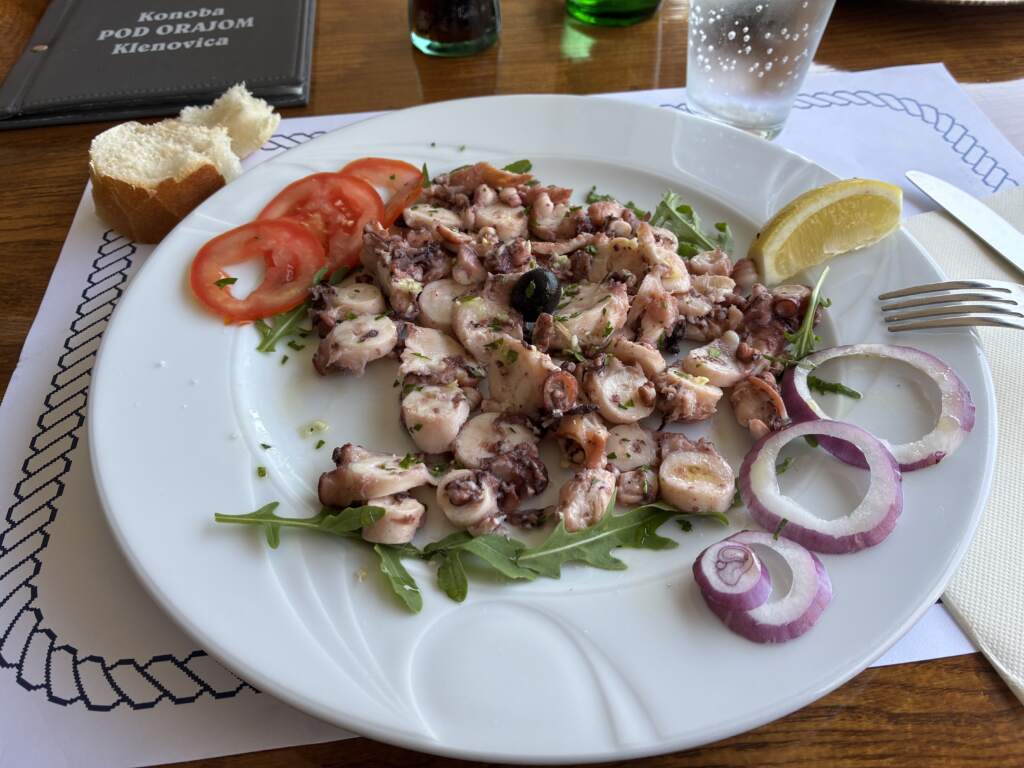
I stopped in two small towns where I had a delicious octopus salad. Then in another where I had a good coffee watching motorcycles go by. A curious detail: hardly anyone waves to fellow riders in Croatia. I ended up doing the same — and right then three bikes went by and waved at me.
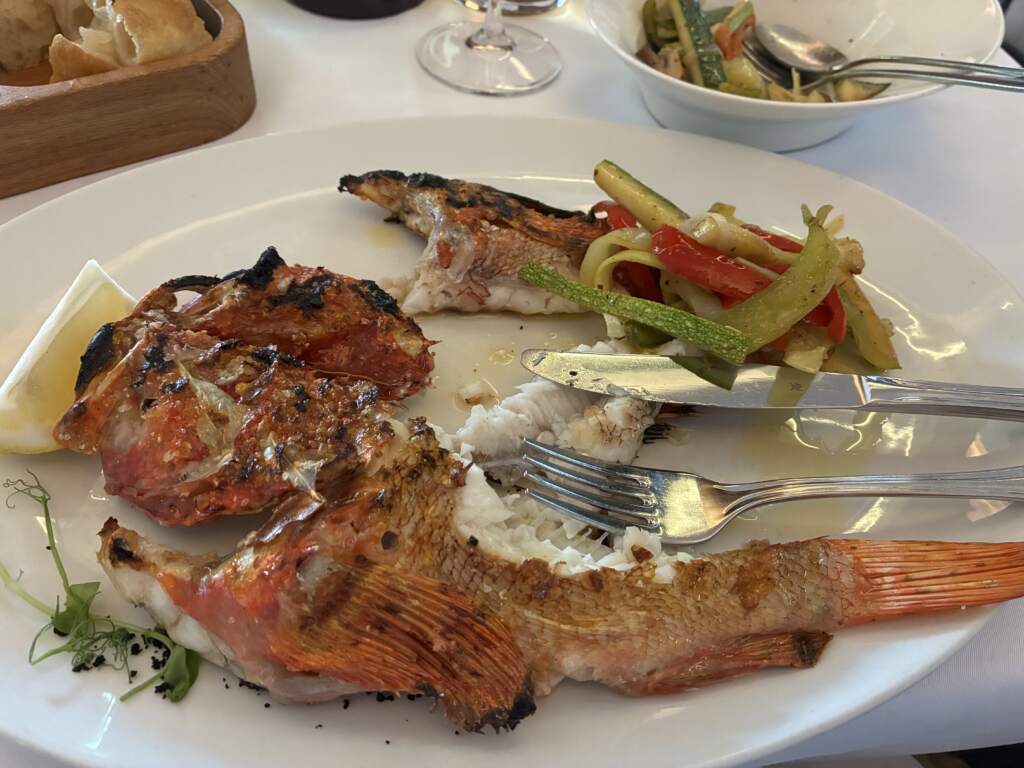
The little hotel I stopped at that day was good. I ate dinner inside since the terrace was fully booked. It’s the kind of place that shows you the fish they’ve caught; they grilled it over charcoal, but truth be told, better versions can be had in San Sebastián; still, it was tasty.
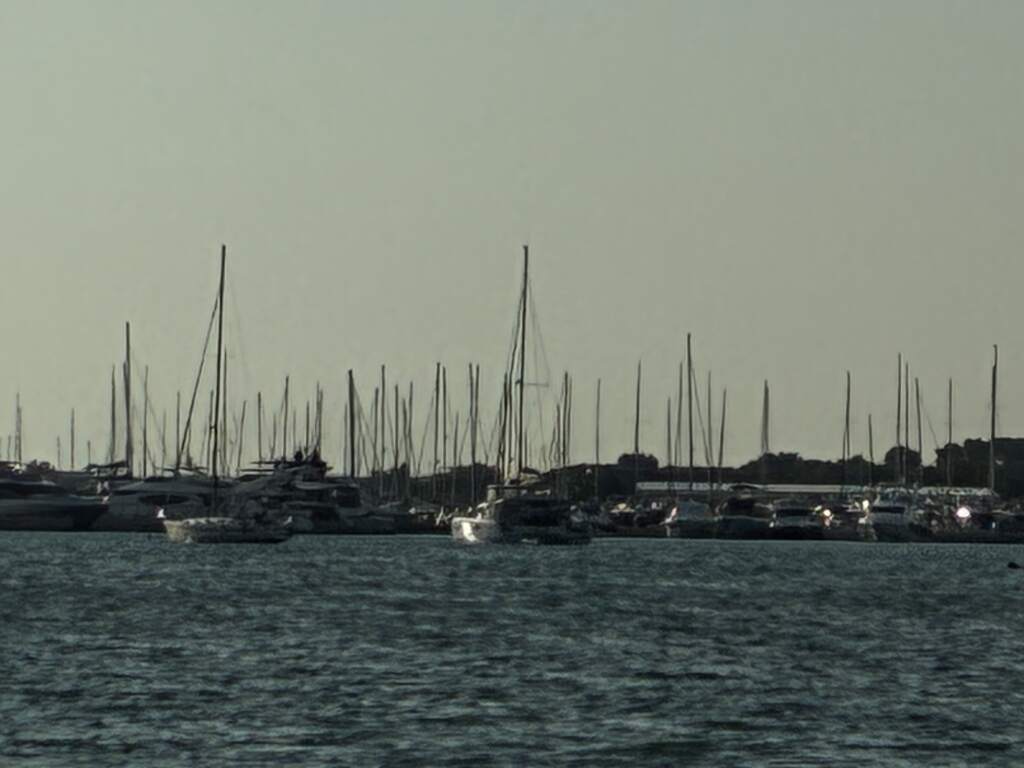
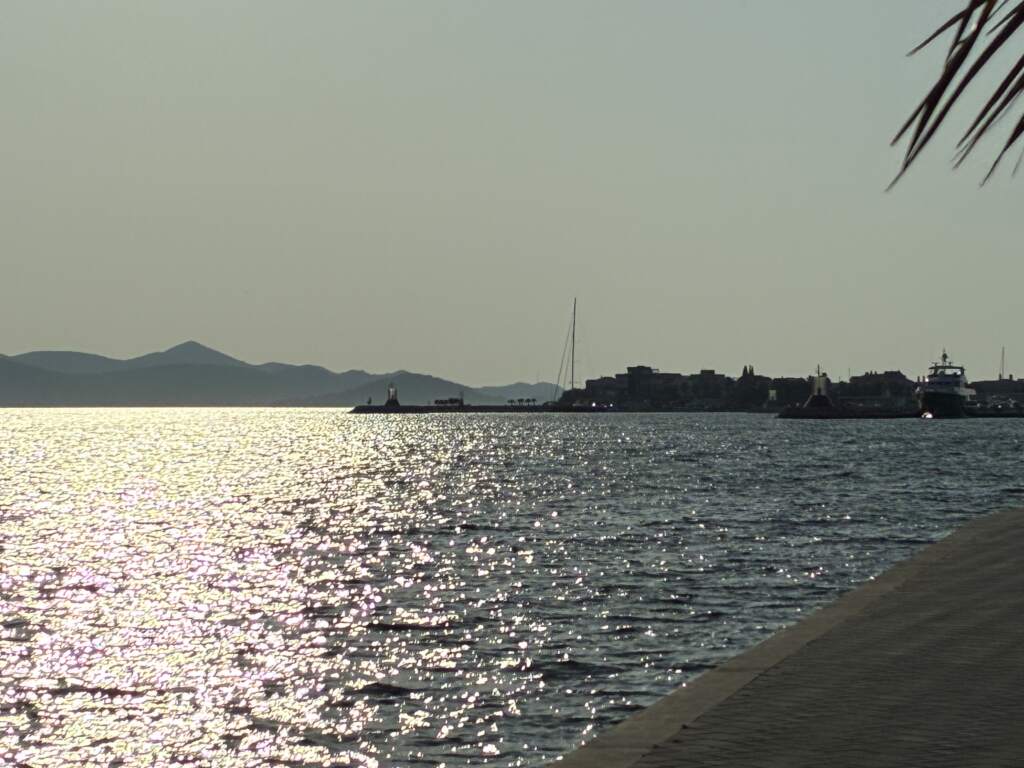
I slept in Sukosan, a small town south of Zadar. A marina full of yachts, another full of sailboats, money everywhere and nobody out walking. Between six and nine in the evening, no phone worked at all — the signal vanished. People seemed to think it was normal. Maybe it was.
The hotel had few rooms and clearly made its money from the restaurant and terrace, and although it was new, you could already tell the bathroom lacked some upkeep — the trick, for instance, is to check the showerhead where the water comes out and see if it’s clean or not.
They must keep it fully booked, one way or another.
Thursday — Sukosan to Medjugorje: the border and the final 15 kilometers
I set off early toward Medjugorje. Leaving Croatia, nobody even looks at you. Entering Bosnia is like an airport — passport in the machine, go on through. Fifteen kilometers later I arrived at Medjugorje.
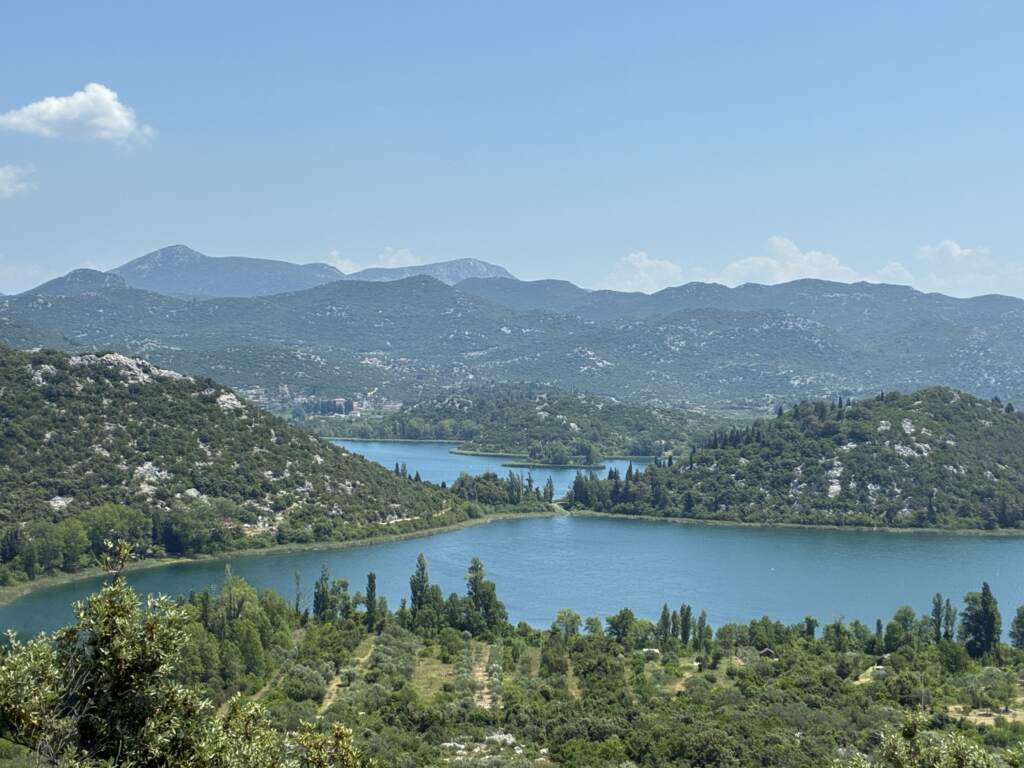
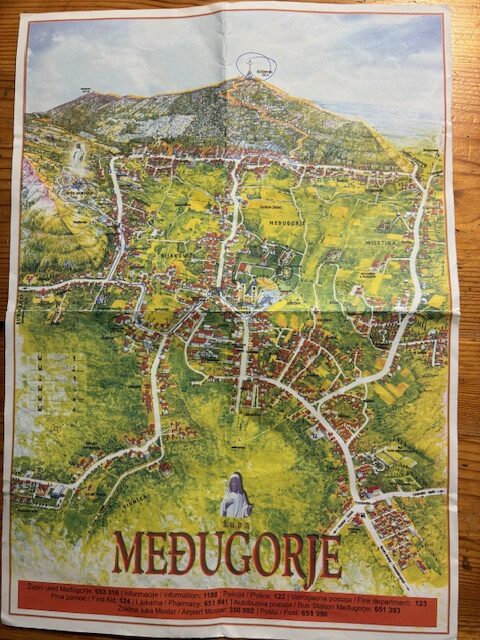
Here’s a map of Medjugorje, so you can see it’s the closest thing to a Croatian village … in Bosnia.
What happened there stays with me.
🏍️ Motorcycle Ride Through the Balkans: From Zaragoza to Bosnia via France, Italy and Croatia